Prototyping a mobile-first gaming platform
Exploration into how users can create publish, distribute, and run live game experiences through an AI-first mobile platform prototype.
Platform:
Meta Horizon mobile gaming platform
Scope:
Prototyping, strategy, UX writing, prompt design
Partners:
UXR, product design, design leadership, and engineering partners
The problem
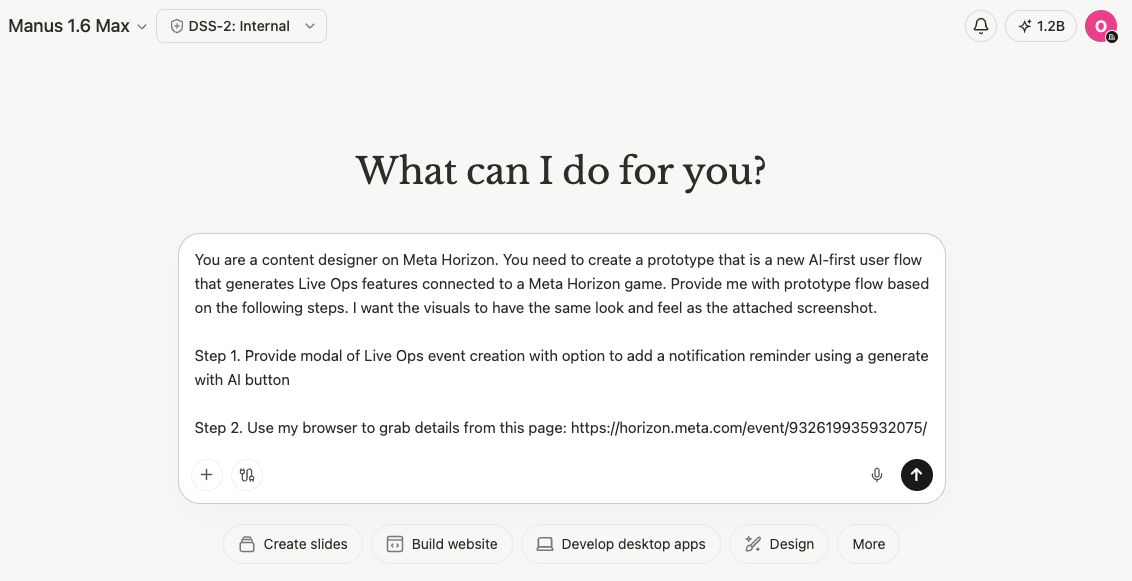
With the pivot of Meta Horizon from VR gaming to an AI-first mobile gaming platform—where consumers and game creators can use template games and AI prompts to create custom games to play with friends and share with their community—we needed to design a new platform experience.
I worked as a content designer prototyping the web game creation flow, with a focus on game publishing, distribution, and LiveOps.
The process
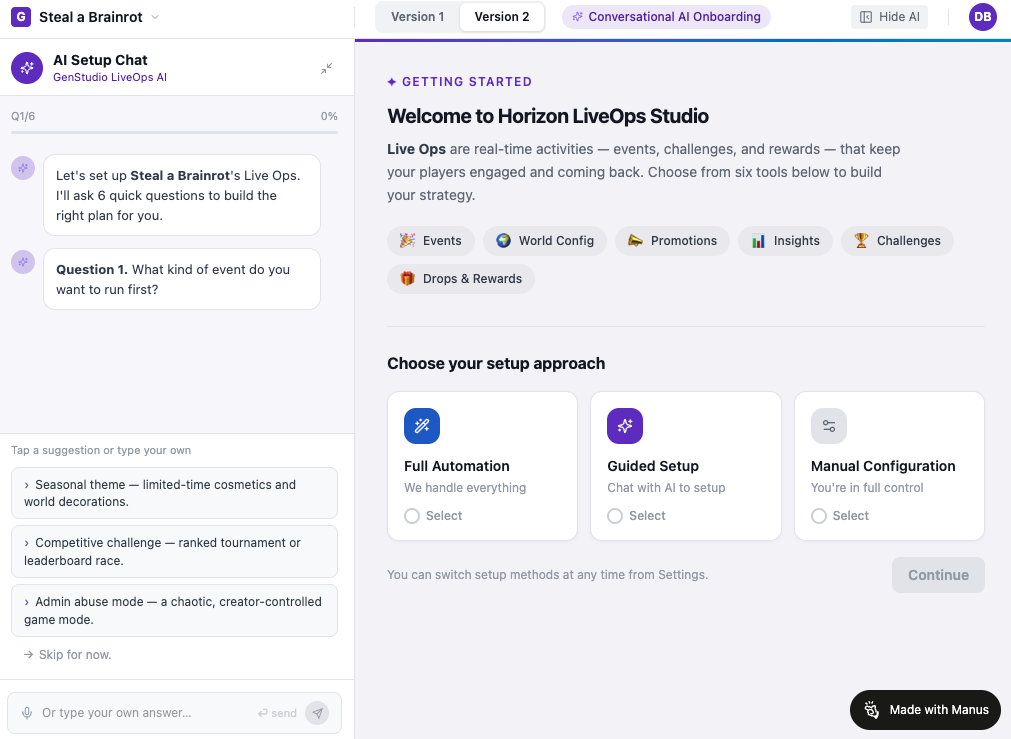
Defining the LiveOps vision
I defined an AI-first, lightweight approach to LiveOps that enabled creators to run and grow live game experiences on Meta Horizon. The goal was to help creators keep content fresh, increase player retention, and grow audiences over time.
Research and collaboration
I partnered with UXR to understand creator needs and collaborated with product design to prototype concepts in Manus. I also facilitated design critiques and stakeholder reviews to validate ideas and build alignment.
Simplifying creator workflows
I developed clear terminology and content that made complex LiveOps and player engagement tools easy for creators to understand. I also reimagined these capabilities as AI skills, enabling creators to add proven engagement mechanics through simple natural-language prompts.
Publishing and growth
I prototyped end-to-end publishing and LiveOps workflows, including AI-powered automation, auto-generated game preview reels for Facebook and Instagram, and creator notifications for key build and publishing milestones.
The result
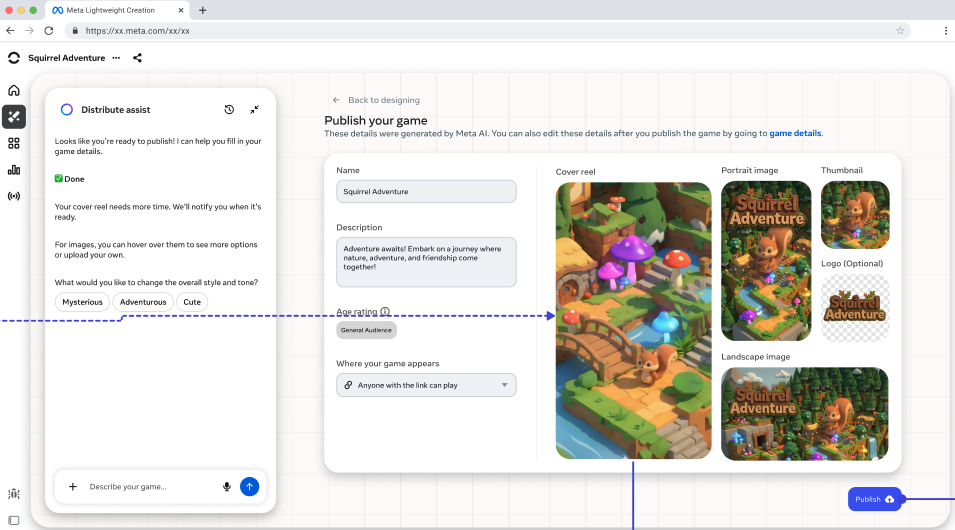
The work helped validate how AI-first LiveOps, automated publishing updates, preview reel generation, and milestone notifications could operate as a unified creator journey.
It also shaped early product direction by surfacing how language, guidance, and workflow design would need to evolve to support a mobile-first, AI-driven creation platform.